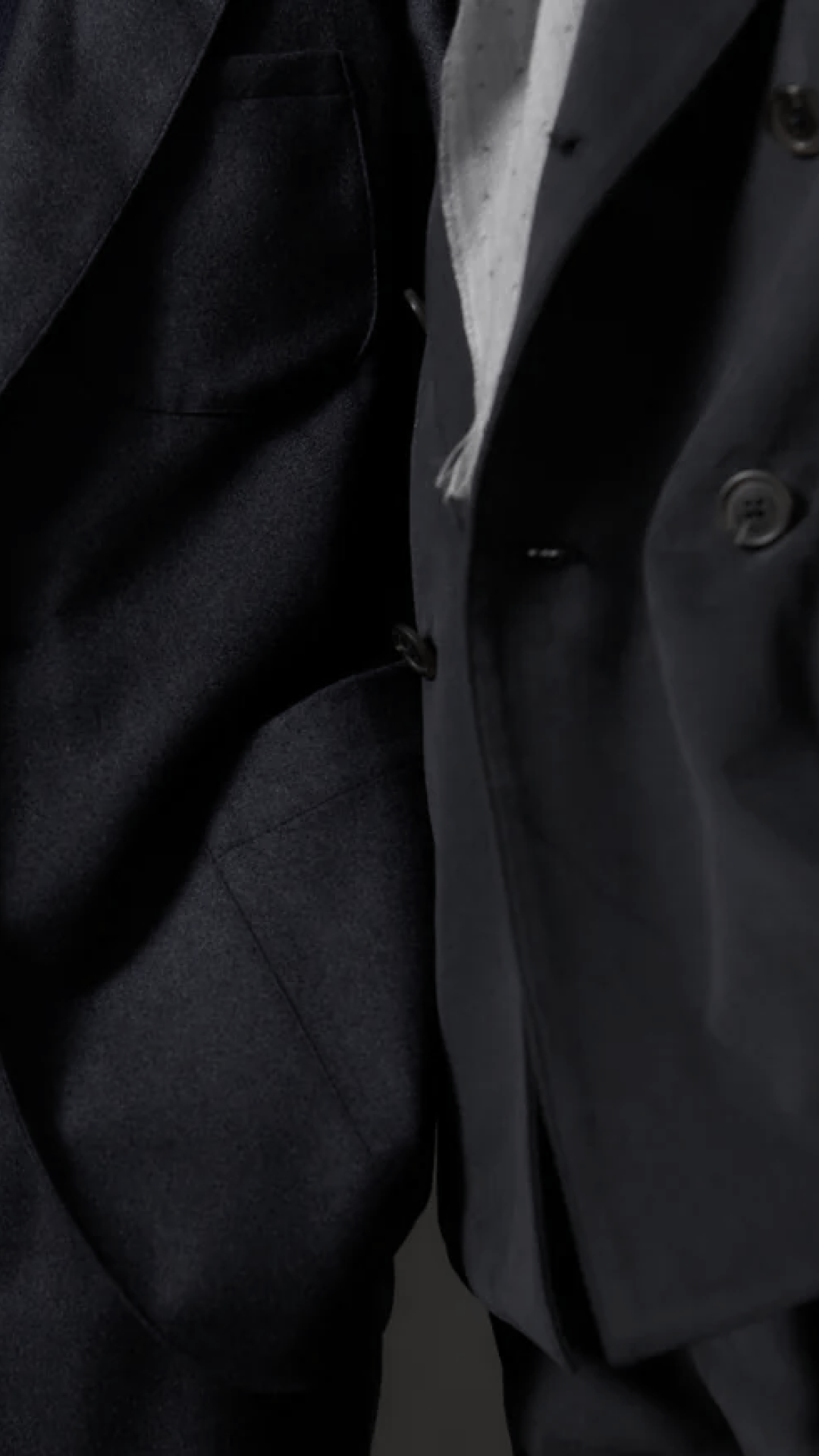
Made to Measure Overcoats

The overcoat holds a quiet authority within the wardrobe. At Wynona, it is approached with the same restraint as tailoring, cut to follow the body, allowing cloth and proportion to do the work over time.

The offering centers on three forms: a single-breasted and double-breasted model, alongside a more relaxed raglan. The tailored coats draw from the language of the jacket, clean lines, softly extended shoulders, and a silhouette that falls with ease rather than rigidity. They are best realized in denser autumn and winter cloths, where structure and drape find balance.

VISIT THE SHOP

Craft


All Wynona garments are produced in Portugal, in collaboration with a third-generation family workshop. The work is guided by continuity, knowledge passed through hands rather than systems.

Each piece begins with an individual pattern and moves through a measured sequence of cutting, construction, and finishing. The process is deliberate, carried out without the compression of industrial timelines, allowing the garment to take shape with care and precision.

The workshop operates on a smaller scale, with a focus on consistency and responsibility. Production is paced, materials are respected, and the people behind the work remain central to it. The result is not only in how the garment looks, but in how it has been made.

Materials

Cloth defines the overcoat. More than any other garment, it is the material that determines how it carries, its weight, its fall, and the way it endures through seasons of wear.

The Wynona overcoating selection brings together substantial wools and cashmeres from mills in Italy and Great Britain, alongside smaller, more considered developments produced in limited runs. Meltons, covert cloths, brushed flannels, and dense twills are chosen not for effect, but for how they hold shape, take on movement, and age with use. Softer compositions offer ease and fluidity, while firmer cloths lend quiet structure and presence.

The range spans winter weight through to lighter transitional fabrics, yet remains restrained in expression. Texture and finish take precedence over pattern. What defines each piece is not its immediacy, but how the cloth settles over time, gaining character, softening at the edges, and becoming increasingly its own.